
Why Does My Car Shake When I Brake?
There’s nothing quite like that moment when you press the brake pedal and suddenly feel a vibration run through the steering wheel or the entire vehicle. It’s unsettling, distracting, and honestly a little nerve‑wracking. Drivers around Greenfield mention this all the time at Gordie Boucher Nissan, and it’s usually a sign that something in the braking or wheel system needs attention. When a car shakes when braking, it’s not just an inconvenience—it’s your vehicle’s way of saying something isn’t operating the way it should.
Let’s break down the most common reasons behind “Why does my car shake when I brake?” and how to check for them, and why getting service sooner rather than later can save you a lot of stress (and money).

Key Takeaways
- Brake pad wear is one of the most common causes of shaking.
- Warped rotors create vibration you’ll feel in the pedal or steering wheel.
- Unbalanced tires can mimic brake‑related shaking.
- Sticking calipers causes uneven braking pressure.
- Suspension wear leads to instability and shaking when braking.
Worn Brake Pads
Brake pads naturally wear down over time, but once they get too thin, they can’t grip the rotors smoothly. That uneven contact creates vibration you’ll feel in the pedal or steering wheel. If you hear squealing, grinding, or notice longer stopping distances, worn pads may be the culprit.
How to check:
- Look through the wheel spokes to see the pad thickness.
- Listen for high‑pitched noises.
- Pay attention to how the pedal feels—soft, spongy, or shaky.
Warped or Uneven Rotors
Rotors take a beating every time you brake. Heat, heavy braking, or simple wear can cause them to warp. When that happens, the brake pads can’t make smooth contact, leading to the car shaking when braking—especially at higher speeds.
How to check:
- Notice pulsing in the brake pedal.
- Feel vibration in the steering wheel.
- Listen for scraping or rhythmic noises.
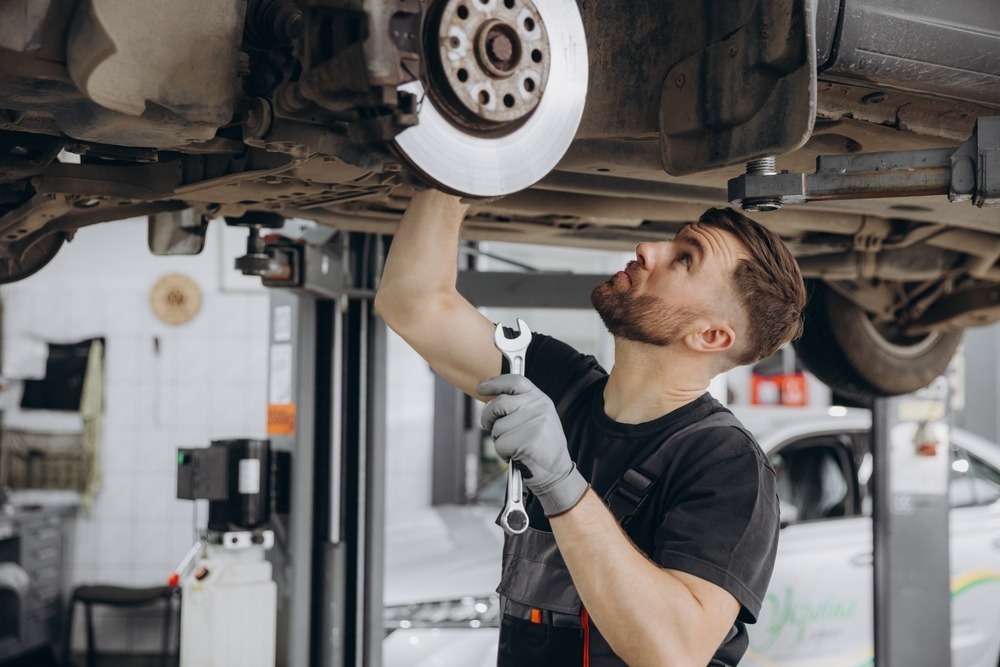
Warped rotors are among the most common causes of “Why is my car shaking when I brake?” and they shouldn’t be ignored.
Unbalanced or Damaged Tires
Sometimes the issue isn’t the brakes at all. Tires that are unbalanced, unevenly worn, or damaged can cause shaking that becomes more noticeable when braking. If the vibration happens even when you’re not braking, tires are a strong suspect.
How to check:
- Look for uneven tread wear.
- Check tire pressure regularly.
- Pay attention to shaking at highway speeds.
Sticking Brake Calipers
Brake calipers press the pads against the rotors. If a caliper sticks, it can cause uneven braking pressure, pulling, or shaking. You might also notice a burning smell or the vehicle pulling to one side.
How to check:
- Feel for pulling when braking.
- Notice excessive heat from one wheel.
- Look for brake dust buildup on one side.
Worn Suspension or Steering Components
Your suspension and steering systems keep the vehicle stable. When parts like ball joints, tie rods, or control arm bushings wear out, they can’t keep the wheels aligned properly. That instability becomes obvious when braking.
How to check:
- Listen for clunks or rattles.
- Notice drifting or wandering while driving.
- Feel vibration that gets worse over time.
Why You Shouldn’t Ignore Brake‑Related Shaking
A shaking vehicle is more than just a nuisance. It’s a warning sign that something is wearing out, misaligned, or failing. Ignoring it can lead to:
- Longer stopping distances
- Higher repair costs
- Damage to other components
- Reduced safety
- Stressful driving conditions
Brake issues rarely fix themselves. The sooner you get them checked, the safer you’ll be—and the less you’ll spend in the long run.

Why Getting Service Matters
At Gordie Boucher Nissan in Greenfield, technicians see these issues every day. A quick inspection can pinpoint the cause and prevent bigger problems. Whether it’s brake pads, rotors, tires, or suspension components, catching the issue early keeps your vehicle running smoothly and safely.
Regular brake inspections also help maintain fuel efficiency, reduce wear on other parts, and give you peace of mind every time you hit the road.
Don’t Wait When Your Car Starts Shaking
When your vehicle shakes during braking, it’s trying to tell you something. Whether it’s worn pads, warped rotors, unbalanced tires, sticking calipers, or suspension wear, the vibration is a sign that attention is needed. Getting it checked at Gordie Boucher Nissan ensures your vehicle stays safe, reliable, and ready for whatever Wisconsin roads throw your way.
FAQ
Why does my steering wheel shake when I brake?
This usually indicates warped rotors or worn brake pads, which can cause uneven braking pressure.
Can bad tires cause shaking when braking?
Yes. Unbalanced or unevenly worn tires can create vibration that becomes more noticeable during braking.
Is it safe to drive when my car shakes while braking?
It’s best to get it checked quickly. Shaking often signals a developing brake or suspension issue.
How often should brakes be inspected?
Most drivers benefit from a brake inspection every 6 months or during routine service.
What’s the most common cause of brake‑related shaking?
Warped rotors are among the most common culprits, especially when the shaking occurs at higher speeds.

0 comment(s) so far on Why Does My Car Shake When I Brake?